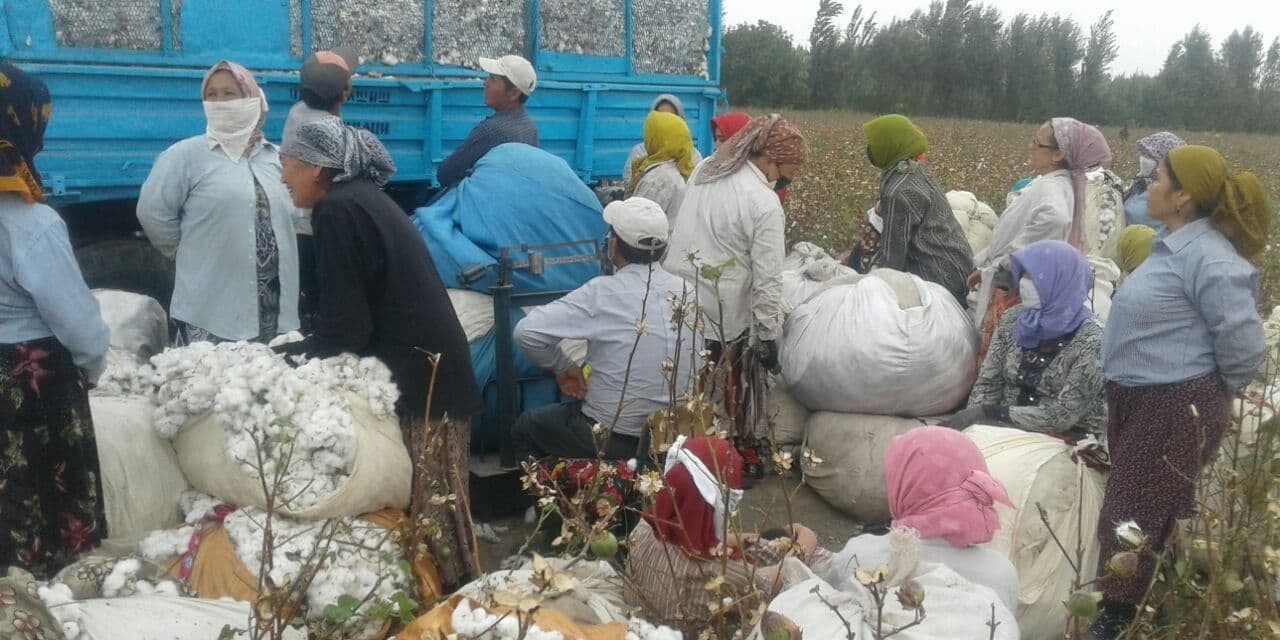

Speaking Cotton — A New Film on Forced Child Labour

Posted on January 10, 2012 by admin | No comments

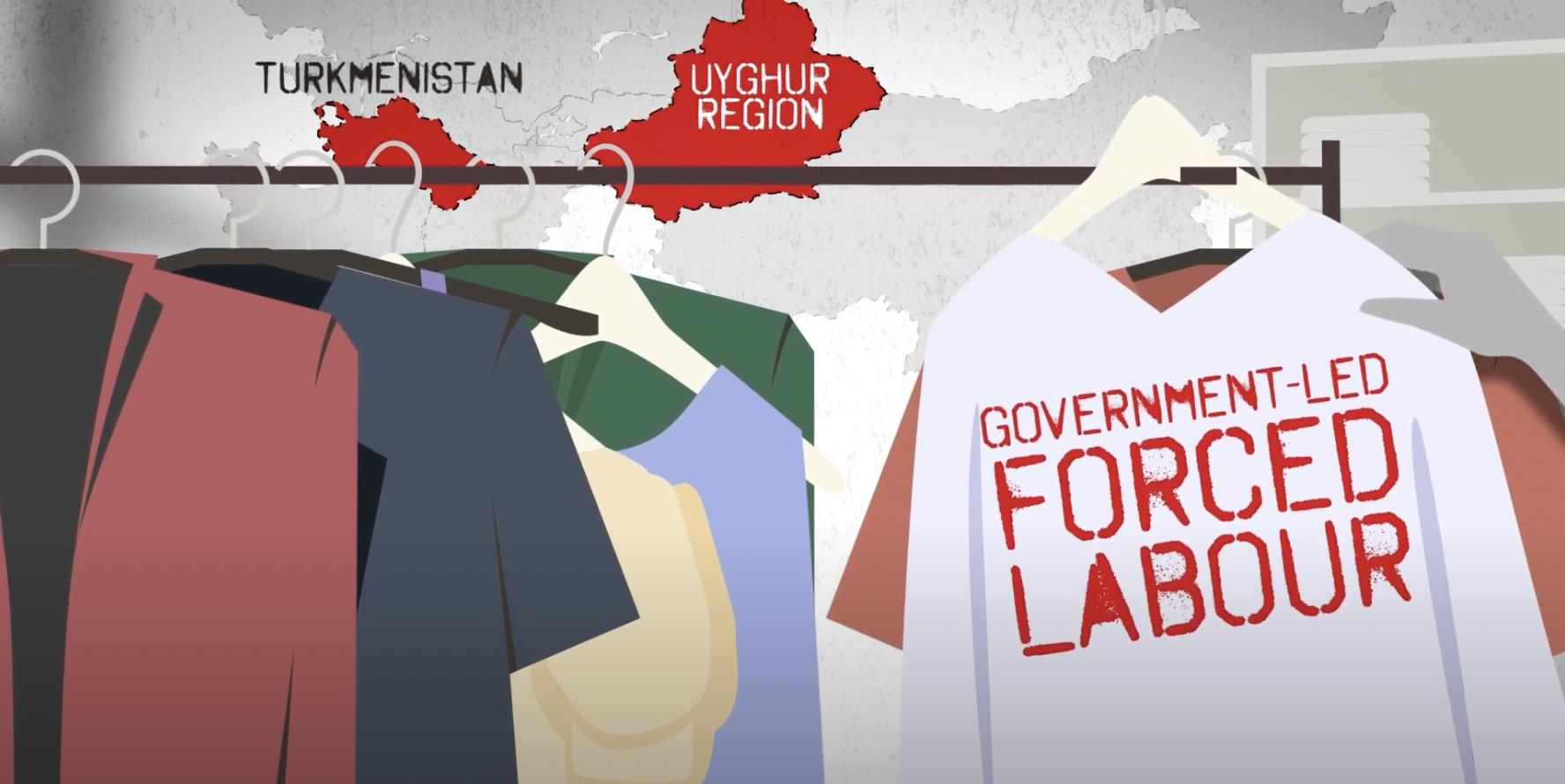
A new film about forced child labour in the cotton industry in Uzbekistan was released in December.

Speaking Cotton, a film by Stefanie Trambow and Erik Malchow, portrays the ongoing exploitation of children in Uzbekistan’s cotton fields. In German and Russian, with English subtitles.

Anti-Slavery International Brings 13,000 Signatures to EuroParliament

Posted on December 7, 2011 by Catherine A. Fitzpatrick | No comments

Uzbek girl, 12, in Kashkadarya

Anti-Slavery International, the London-based non-governmental organisation working to elminate all forms of slavery worldwide, brought 13,072 signatures to the European Parliament on December 6, urging that members of parliament reject legislation that would reduce tariffs on imports of cotton from Uzbekistan.

Founded in 1839, Anti-Slavery is the world’s oldest international human rights organisation.

Anti-Slavery spent a year gathering the 13,072 signatures using the popular petitions site change.org and other campaign sites, and through the use of a video, “End Cotton Crimes.” They persuaded pop singer Ricky Martin to endorse the effort, and also got ethical fashion bloggers and online magazines for the ethical consumer to post the link to the petition.

The campaigners hand-delivered the package of signatures to the European Parliament on December 7th.  MEP Catherine Bearder, a Liberal Democrat and supporter of anti-trafficking initiatives, invited to her office school-children who had written expressing their concern about their counterparts picking cotton in Uzbekistan.

As Anti-Slavery writes:

Shannon Harris aged 14, from Eastbourne said: “When I learnt what was going on in Uzbekistan, it was unbelievable. Students my age are supposed to be in school studying but are being forced to work in slavery picking cotton. Why is this still happening?”

The children were inspired by a lesson at school:

Neil Pittman, head of upper school at Bishop Bell, said: “After studying the UN Covention on the Rights of the Child, our pupils were shocked to hear that Uzbekistani children were forced by their government to work during the cotton harvest.
The injustice of the situation was very clear to the pupils and they were concerned that cotton harvested by children may be used in the clothes they wear.”

Joanna Ewart-James, Anti-Slavery International’s Supply Chain Co-ordinator, said:

“International law demands immediate action to stamp out slavery and the European Union must consistently work to end this abuse. By rewarding Uzbekistan with trade preferences the EU is ignoring the reality of state-sponsored forced child labour in Uzbekistan.”

Kids Hard At Work In Uzbekistan’s Cotton Fields

Posted on December 4, 2011 by admin | No comments

For years, Uzbek authorities have denied widespread reports that children are sent to the fields to pick cotton every harvest season.

Now viewers can see for themselves, thanks to video footage collected by human rights activists and sent to RFE/RL’s Uzbek Service. There is no denying that the school-age children in the video are picking cotton and carrying heavy sacks on their shoulders. Determining whether they were taken away from their studies or forced to work in the fields proves more difficult.

The human rights activists who provided the video, whose identities are being withheld for their protection, said one of the children identified himself as 10-year-old Otabek. Others look even younger.

Human-rights defenders and the region’s independent media, including the ferghana.ru news website, have reported that the children, as well as teenagers and college students, were all forced by the state to help harvest the country’s most valuable agricultural product.

Schools and colleges have been shut down in most parts of the country since mid-September, when the harvest season begins.

The footage was shot in Uzbekistan’s major cotton-producing regions, including the Ferghana Valley, Karakalpakistan Autonomous Republic, and the Khorezm and Qashqadaryo provinces.

One of the world’s major cotton producers, Uzbekistan has long been criticized for using what rights activist say is child labor during the two-month harvest season.

The widespread criticism has led some 60 clothing companies, including Gap, H&M, and Marks & Spencer to boycott Uzbek cotton until the country ends its practice of using children as cheap labor.

In September, the organizers of a New York fashion show canceled a runway presentation by Gulnora Karimova, the daughter of President Islam Karimov, amid protests by activists who claim her collection was made with Uzbek cotton harvested by children.

This week is the tail end of this year’s cotton harvest, and children are heading back to school to resume their studies.

By Shukhrat Bobojonov and Farangis Najibullah. Copyright (c) 2011. RFE/RL, Inc. Reprinted with the permission of Radio Free Europe/Radio Liberty, 1201 Connecticut Ave., N.W. Washington DC 20036.

Time to Drive Child Labour From Value Chains

Posted on November 29, 2011 by admin | No comments

Patricia Jurewicz, director of the Responsible Sourcing Network, a project of As You Sow, has an op-ed piece at ethicalcorp.com, Time to Drive Child Labour From Value Chains:

During the recent International Cotton and Textile Fair in Tashkent, not a single western buyer signed a contract for Uzbekistan’s cotton, according to a report in the Wall Street Journal. This boycott demonstrates the strength of a pledge signed by more than 60 apparel manufacturers, brands and retailers to eliminate forced child labour in the cotton industry.

Jurewicz writes of the growing consumer demand for transparency:

Having buy-in throughout the entire global value chain, where all of the dots are connected, is essential. The time of transparency has come. Consumers and legislation are demanding it.

Consumers are demanding to know more about the goods they are purchasing and, thankfully, new technologies are being adopted to give this information to them right at the point of purchase.

US legislation is also starting to demand more transparency.

Read more here.

Activist Urges Uzbek Officials to Comply with Anti-Forced Labour Law

Posted on November 29, 2011 by Catherine A. Fitzpatrick | No comments

Dmitry Tikhonov, a human rights defender in the city of Angren, has appealed to Deputy Prime Minister Rustam Azimov to stop breaking the law and end the exploitation of children in the cotton harvest, the independent website uznews.net reported.

“I addressed my demands to Rustam Azimov because he is personally responsible for overseeing the implementation of the Cabinet of Ministers’ Resolution No.207 of 12th September 2008,” Tikhonov told uznews.net.

Earlier this year at the start of the cotton harvest, Angren authorities posted flyers around the city stating that the use of forced child labour was against the law, uznews.net reported.

Deputy Prime Minister Rustam Azimov at annual meeting of Asian Development Bank, 2010. Photo by Asian Development Bank.

But the leaflet also carried a propaganda twist — it denounced the “mendacious insinuations and misinformation” of foreign media about allegations of widespread forced labour.

In fact, through the efforts of monitors this season, once again massive use of forced child labour has been documented throughout Uzbekistan.

The flyer carried a threat — “any attempts to force children to work, whether by threatening reprisals against the children themselves or their parents, will be dealt with in accordance with the laws of Uzbekistan.”

Parents said the flyer was too little, too late. By the time it was posted, their kids were already out in the fields. Decree 207 was designed to implement Uzbekistan’s obligations in ratifying the conventions of the International Labour Organisation regarding the worst forms of child labour. Activists say that little attention is paid to the decree, however; while it is published on the Internet, it is not broadcast or printed in Uzbekistan.

One good thing is that parents can now cite this law — if they dare, given the possible reprisals.

Tikhonov decided to take up the issue of the non-enforcement of Decree No. 207, and wrote to Deputy Prime Minister Azimov complaining about the forcible recruitment of vocational and high school students to pick cotton. He was particularly disturbed by the practice of parents paying large bribes of up to $120 to get their children out of the harvest. They were too afraid to protest.

Tikhonov, a member of the Human Rights Alliance, also protested the failure to publish the law. The human rights advocate himself has faced reprisals for his work. In 2010, he was approached by strangers on the street who asked why he was writing on the Internet — then hit him over the head with an iron bar. For some time he was denied an exit visa — still required for travel outside of Uzbekistan. He publicized his case and eventually was granted permission, and then was later able to return home.

Clinics Empty as Medical Personnel Forced to Pick Cotton

Posted on November 14, 2011 by admin | No comments

An article about the decline of health care in Uzbekistan at EurasiaNet opens with an explanation for one of the devastating impacts on health care every year during the cotton season: all the medical personnel are forced out to the fields, leaving their clinics behind:

By the time Saidburkhan, a traditional healer from a small Uzbek town in the Ferghana Valley, arrived at work on a recent autumn day, his private clinic specializing in herbal medicine was packed. Three blocks away, a government-run hospital was empty – most doctors and nurses, under pressure from local authorities, were out in the cotton fields, fulfilling government harvest quotas.

Authorities Threaten To Take Foster Child of Human Rights Activist

Posted on November 14, 2011 by admin | No comments

Elena Urlaeva and Abdujalil Boymatov with signs calling for President Karimov's resignation in 2003. Photo by Uznews.net

A human rights leader in Uzbekistan says she is suffering backlash for her work.

Police have come to the home of Elena Urlaeva of the Human Rights Alliance in Tashkent and attempted to remove her 7-year-old foster child, Muhammad, the independent website uznews.net reported.

The aim of the visit was quite simple: he [the policeman] said he had been asked to take Muhammad Mashurov away to a children’s home. But he didn’t show me any proof that he had the right to take a child away from their family. It never occurred to me that a small child could be made a victim of such an unlawful and arbitrary procedure.

The boy is the nephew of Urlayeva’s partner, Mansur Mashurov.

In recent months, Urlaeva has been monitoring the use of forced child labor in the cotton fields and has taken on other injustices in this Central Asian dictatorship, such as the persecution of journalists.

From Choihona at EurasiaNet.org

Actions, Not Words in Uzbekistan

Posted on October 28, 2011 by admin | No comments

Jeff Goldstein, a senior policy analyst at the Open Society Foundations, has a letter to the editor in The Washington Post critiquing the statement from a senior State Department official claiming that Uzbekistan’s President Islam Karimov wants to introduce democratic reforms.

The statement was made during a briefing for the press while Secretary of State Hillary Clinton’s was visiting Uzbekistan.

The State Department’s own reports don’t support this premise, nor does a letter from Assistant Secretary of State Robert Blake sent to NGOs recently, says Goldstein:

So why does a senior U.S. official now believe Mr. Karimov’s pious statements, against all the evidence of the Uzbek dictator’s past actions and previous official U.S. statements and reports? Is it because the United States needs Karimov to keep supplies flowing to Afghanistan?

Primitive Living Conditions for Children Picking Cotton in Uzbekistan

Posted on October 24, 2011 by Catherine A. Fitzpatrick | No comments

Recent photos obtained by the Uzbek-German Forum for Human Rights expose the starkly promitive living conditions for children labouring in the cotton harvest in Uzbekistan.

These photos, taken in October in Kashkadarya region, Uzbekistan show that children as young as 12 are picking cotton and living in primitive conditions for weeks during the harvest.

Uzbek girl, 12, in Kashkadarya

They are forced to sleep together in groups in rooms with only cardboard placed on the floor, with blankets they have brought from home. Their clothes are placed in bags along the wall.

Carboard placed on the floor of spartan sleeping quarters in Kashkadarya.

Girl resting on the floor in cotton harvest, Kashkadarya

For washing up, they have plastic bowls affixed to a log.

The school-children do their own cooking.

Cotton harvest, Kashkadarya

Teachers accompany the children to the fields and work themselves.

Girls in Kashkadarya cotton field.

Children and teacher, Kashkadarya

Girl in cotton fields, Kashkadarya

Somehow, this girl is able to smile despite these primitive and hard working and living conditions in the cotton harvest in Kashkadarya.

UNICEF Confirms Uzbek Government Invitation to Observe Child Labour

Posted on October 24, 2011 by admin | No comments

Young girl picking cottin in Kashkadarya, October 2011

UNICEF representatives have been officially invited to Uzbekistan to conduct monitoring of reports of the use of child labor, Radio Ozodlik reported.

Jean-Michel Delmotte, the representative of UNICEF in Tashkent, confirmed that the proposal had come from the government of Uzbekistan, the Russian news agency Regnum reported. Delmotte said that the Uzbek authorities promised to give him comprehensive assistance in organizing monitoring of the problem of child labor.

Publications by WikiLeaks of alleged classified diplomatic cables from the US Embassy in Tashkent indicate that UNICEF repeatedly tried to minimize the scale of the problem of forced child labor in Uzbekistan and argued against a boycott, EurasiaNet reported.

UNICEF has not made any comment about the WikiLeaks revelations.

Meanwhile, this year, as in past years child labor in the cotton harvest has been documented by local monitors. The Initiative Group of Independent Human Rights Activists of Uzbekistan reported that in Kashkadarya province, fifth-graders were taken to harvest the cotton.

“The daily quota is 80-100 kilos. For each harvested kilo, 150 soums (about 5 cents) is paid,” Surat Ikramov, head of the Initiative Group told Radio Ozodlik.

It is important to point out that while the Uzbek government decided to invite UNICEF to observe child labor, it has refused to invite an independent monitoring group from the International Labor Organization (ILO), however.

Uzbek authorities also continue to interfere with the monitoring of child labor by Uzbek human rights activists. In Koson district, two human rights activists from Kashkadarya were detained by police for monitoring the use of children in the cotton harvest.

In recent years, more than 60 Western companies have pledged not to buy Uzbek cotton in order to compel the government to cease the use of child labor, Responsible Sourcing Network reports. They include Wal-Mart, Marks & Spencer, the Gap, Tesco, Gymboree and others.

The Uzbek government continues to deny that children are forced to work in the harvest.

keep looking »
  • Cotton Campaign RSS Feeds

  • Follow Us On Twitter

  • About


  • REPORTS

    Download 2010 SOAS Report What Has Changed

    The production and export of cotton continues to be a major feature of the economy, politics and everyday lives of the people of Uzbekistan and Tajikistan. This report analyses the nature and causes of their use of child labour in the cotton sector.

  • Authors

  • Google Analytics